In contemporary industrial engineering, especially in high-precision sectors such as automotive, electronics and micro-mechanics, conventional stopwatch time study is no longer sufficient. When production cycles fall below 30 seconds, the variability no longer lies in the machine, but in the biomechanical inefficiency of the operator managing tight tolerances.
This technical article breaks down the necessary transition from traditional time measurement toward micro-methods engineering, grounded in international standards and predetermined time systems (PTS).
From Traditional Stopwatch Time Study to Forensic Micro-methodology
Why the "naked eye" fails in cycles under 0.5 minutes
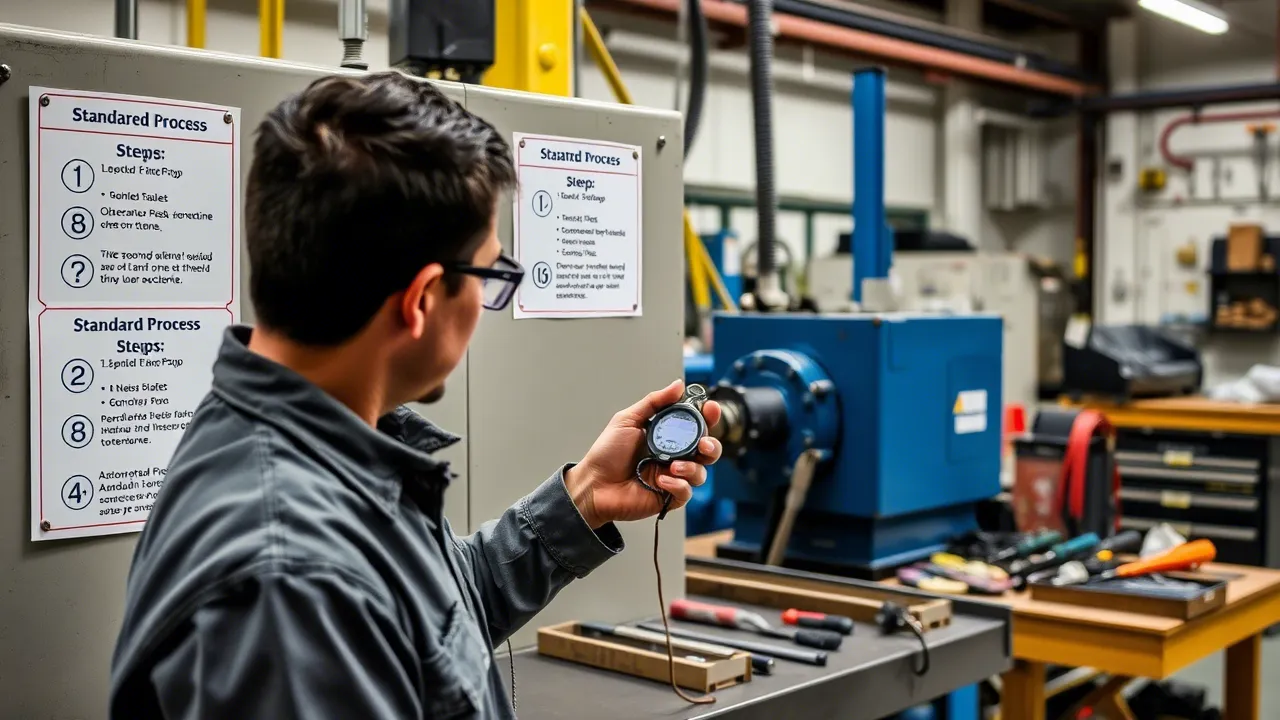
Human physiology sets a limit on visual and motor reaction time (approximately 0,2 seconds). In fine assembly operations, where a "Grasp" movement may last less than 0,04 minutes (approx. 2,4 seconds), the analyst who relies exclusively on direct observation and the stopwatch incurs a systematic error.
The inability to segregate such brief elements causes productive movements to be grouped together with micro-waste, contaminating the standard time. To overcome this physical limitation, advanced video analysis tools such as Cronometras make it possible to break down the operation frame by frame, ensuring a level of precision that the human eye cannot guarantee in real time.
The limitation of snapback time study in high precision
The "snapback" method introduces a mechanical and human error at every reading point. In a 20-second cycle with 5 elements, the accumulated error can represent as much as 4-6% of the total time. In production volumes of millions of units/year, this measurement error translates directly into losses of gross margin or into the impossibility of balancing a line correctly.
Biomechanical inefficiency: The new focus of methods engineering
The objective is no longer for the operator to move faster (intensity), but to eliminate the entropy of movement. Biomechanical inefficiency arises when the method forces the body to perform non-standardized compensations: postural adjustments, shifts in visual focus or unplanned complex manipulations.
Critical Classification of Therbligs in High-Precision Environments
The Therblig system (Gilbreth) must be re-evaluated through the lens of micro-efficiency and its impact on TMU (Time Measurement Units, where 1 TMU = 0.0006 min).
Search (Sh) and Select (St): Cognitive micro-stops and their impact on TMU
In fine assembly, the lack of pre-positioned feeding generates the Therbligs "Search" and "Select". These are not pure physical movements, but cognitive stops.
- Technical Impact: An unplanned "Search" (Search - Sh) due to mixed parts can add between 20 and 50 TMU per cycle.
- Solution: Methods engineering must eliminate these Therbligs through workstation design that presents the part in a fixed orientation, turning the movement into a simple "Reach" (Reach - R).
Position (P): The exponential cost of H7/g6 tolerances
The Therblig "Position" is the biggest time consumer in precision assemblies. The difference in TMU between a Position P1 (loose) and a P3 (close/exact) is exponential. When we work with isostatic fits or H7/g6 tolerances, the operator tends to make micro-adjustments. If these are not standardized (through guides or chamfers in the tooling), the standard deviation ($\sigma$) of the cycle shoots up.
Hold (H): The left hand as a clamp and the violation of motion economy
A field analysis reveals that in 65% of poorly designed manual workstations, the non-dominant hand acts as a "human clamp" (Therblig: Hold - Hold). This violates the fundamental principle of motion economy: both hands must work simultaneously on productive tasks. Before optimizing the cycle, it is advisable to carry out prior sampling with tools such as WorkSamp, to scientifically quantify how much time per shift is lost in this concealed inactivity of the limbs before entering the workstation redesign.
Inspect (I): Perceptual fatigue vs. metabolic fatigue
In fine assembly, fatigue is not measured in kilocalories (metabolic), but in cognitive load. The Therblig "Inspect" demands visual focus and decision-making. If the cycle requires multiple inspections, the fatigue allowances (Rest Coefficient) must be calculated on the basis of eye and mental strain, not physical effort.
Technical Tools: MTM, MOST and Work Measurement
MTM-1: The gold standard for method design in manual assembly
For short cycles (< 1 minute), MTM-1 (Methods-Time Measurement) is irreplaceable.
- Advantage: It assigns predetermined values to basic movements (e.g. "Reach R10A" or "Grasp G1A").
- Application: It makes it possible to predict the time of a process before the workstation physically exists, facilitating cost calculation prior to industrialization.
BasicMOST vs. MTM: Granularity in moderate variability
While MTM analyzes finger movement, BasicMOST focuses on the displacement of objects.
- Limitation: In very fine assembly, the "General Move" block of MOST may lack the granularity needed to distinguish between a smooth assembly and one with slight pressure. For high precision, MTM-1 or MTM-2 are superior.
The hybrid strategy: Validation with hundredth-second time study and OEE calculation
The theoretical design (MTM) must be validated against reality. The optimal strategy involves:
- Define the ideal method and standard time with MTM.
- Measure the actual execution with hundredth-second time study.
- The difference between the two is the "Management Loss" or operational inefficiency. To close the loop, it is vital to integrate these standards into a production control system such as Induly, which makes it possible to monitor OEE in real time and detect when the actual cycle time deviates from the calculated technical standard.
2025 Regulatory Framework: Ergonomics and UNE-ISO Standards
Toward 2025, European regulation will tighten the relationship between predetermined times and occupational health.
Implications of UNE-EN ISO 11228-3 in high-frequency handling
This standard is critical for fine assembly. It sets limits on repetitiveness (movements per minute). If a method design exceeds the recommended frequency for a muscle group (e.g. wrist in manual screwdriving), the standard time must be penalized with a high recovery factor, or the process must be automated.
Workstation design according to UNE-EN ISO 6385: Avoiding the extreme "Reach" (R)
A workstation design that forces "Reach" Therbligs into maximum extension zones (class C) will be questionable from a regulatory standpoint. Engineering must bring the components closer to the comfort zone (class A), reducing the fatigue index and the cycle time (an R30 requires fewer TMU than an R50).
Digital Twins and motion capture: The end of "rating factor bias"
Performance rating (Normal vs. Optimum Pace) has always been subjective. The trend is the use of Digital Twins and motion capture (Motion Capture) to objectify execution speed, eliminating analyst bias (rating factor bias) and providing irrefutable data before works councils.
Economic Justification and Profitability of Micro-motion Analysis
Variability reduction (Sigma) and flow stabilization
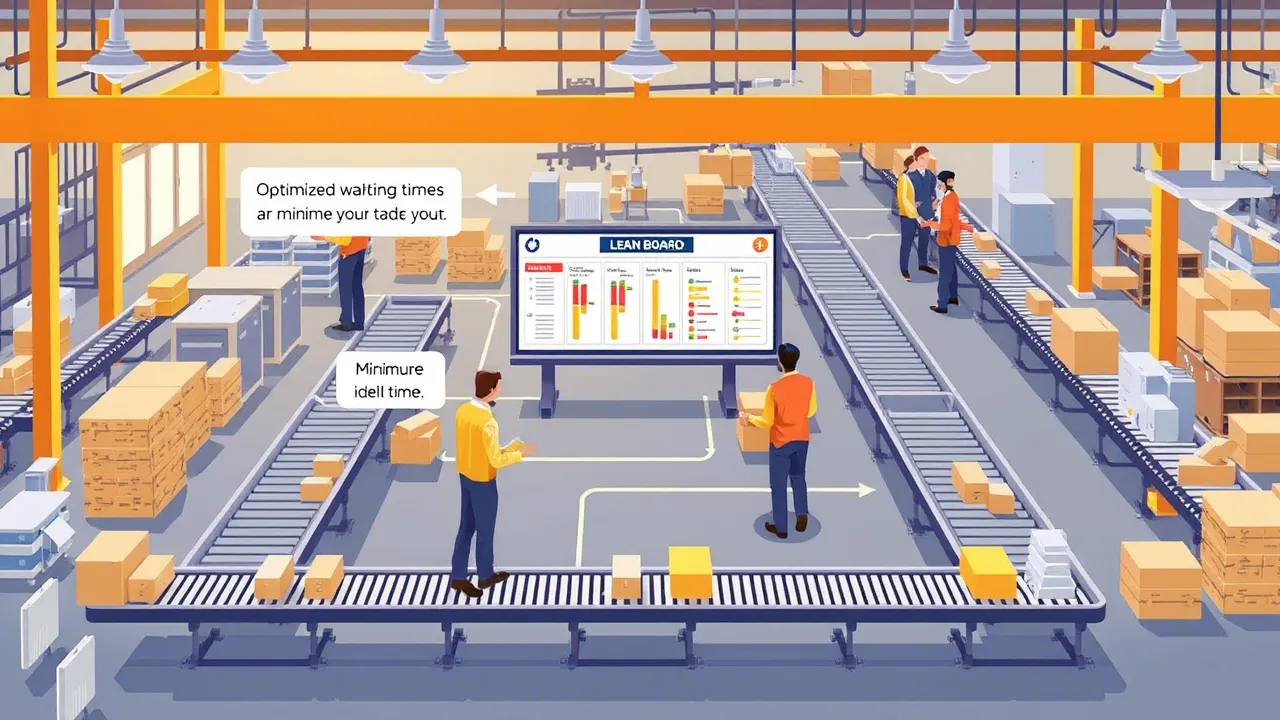
Therblig analysis eliminates operational subjectivity. By standardizing how a "Grasp" is performed, we reduce the standard deviation of the process. A stable process (low $\sigma$) makes it possible to reduce inventory buffers between stations and makes the flow predictable (JIT/Lean).
Recovery of productive capacity through tooling engineering
Identifying and eliminating a "Hold" (H) with a low-cost fixture can free up one hand, allowing parallel operations and reducing cycle time by 15-20%. This is equivalent to increasing plant capacity without investing in new machinery.
The cost of estimation error at high volumes
In a 15-second cycle, a 1-second error in the standard (common without MTM) is an error of 6,6%. If we cost the product with that error, we are losing competitiveness or direct margin. Precision tools such as Cronometras pay for themselves with the correction of a single incorrect standard on a high-rotation line.
Micro-methods Engineering: The Value Proposition of Cronometras
Modern time engineering is not about watching a stopwatch, but about designing the architecture of work.
From time calculation to the design of atomic processes
At Cronometras, we propose a transition from the role of "time analyst" to that of "micro-methods architect". Using Therblig analysis, we break the operation down into its atomic units in order to rebuild it while eliminating everything that adds no value for the end customer.
Methods auditing and technical defense before committees
Time standards derived from a rigorous MTM/Therblig analysis, backed by video recording and compliance with ISO regulations, are technically unassailable. This gives plant management the legal and technical security needed to negotiate workloads and define productivity targets with total transparency.
Don't want to do it yourself? We do it for you from €800
If you prefer to outsource it, Cronometras delivers a complete time and motion study from a single video: elemental breakdown, OIT/TAL fatigue allowances, standard time with tolerances, and a report in PDF + Excel + JSON ready to present to management.